
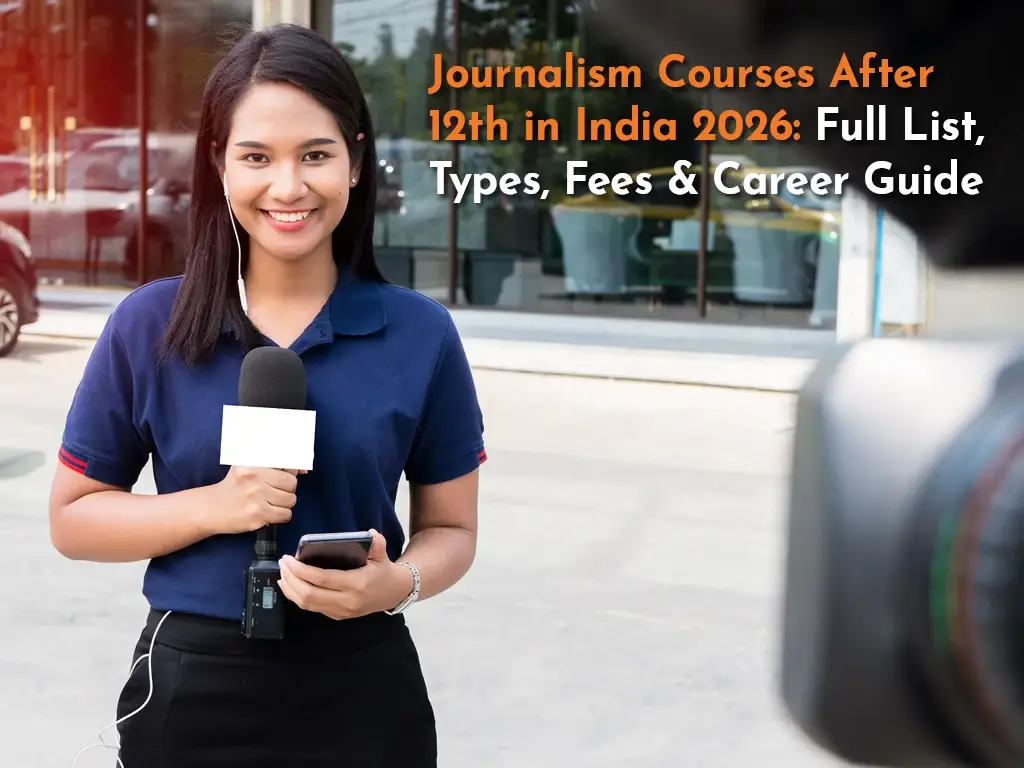


Students who choose journalism courses after 12th grade don’t always want to become a television anchor or newspaper reporter. Some are drawn to writing. Some like following current affairs. Some enjoy asking questions, meeting people, recording stories, or understanding how public opinion is shaped.
That is what makes journalism courses in India a broad field today. Students can work in news reporting, editing, digital media, video production, podcasts, social media, public relations, advertising, or corporate communication. The newsroom has changed, and so have the careers connected to it.
A student who wants proper training should look beyond the course name. A good Mass Communication college should offer practical assignments, internships, studio exposure, writing practice, and a fair understanding of how the media industry actually works.
This article looks at journalism courses in India after Class 12, eligibility, the admission process, fees, career options, salary scope, and colleges so students can understand the field before choosing it.
Types of Journalism Courses After 12th
In India, students can pursue several journalism courses. It depends on what they want to study and the kind of training they’re looking for. Students may choose to pursue a full undergraduate degree or may prefer to build specific media skills through a short certification course or diploma while looking for journalism courses in India.
Bachelor’s Degree Courses
A bachelor’s degree is usually the preferred choice for students who want to build a long-term career in journalism, media, or communication. These courses not only teach theory. They also give students a chance to work on writing assignments, newsroom projects, internships, media labs, production work, and other practical tasks that help them understand the field more closely.
Popular Courses:
- BA Journalism
- Bachelor of Journalism and Mass Communication (BJMC)
- BA Mass Communication
- BA Multimedia and Journalism
- BA Media Studies
Duration: 3 Years
Eligibility: An aspirant should have passed Class 12 (10+2) from a recognized Board in any stream (Science, Commerce or Arts). Some universities may have minimum qualifying marks or may conduct entrance exams.
Average Course Fees: ₹50,000 – ₹3,00,000 per year (depending on the institution).
Career Opportunities:
- Journalist
- News Reporter
- TV Anchor
- Digital Journalist
- Content Writer
- News Editor
- Public Relations Executive
- Social Media Manager
- Media Researcher
- Corporate Communication Executive
A bachelor’s degree also provides a strong foundation for pursuing higher studies like a master’s in Journalism or Mass Communication.
Diploma Courses
For students who want practical, industry-orientated training in a shorter timeframe, diploma programmes are perfect. These courses focus on practical skills in reporting, editing, broadcast, digital content creation and multimedia production so that graduates are job-ready.
Popular Diploma Courses:
- Diploma in Journalism
- Diploma in Mass Communication
- Diploma in Broadcast Journalism
- Diploma in Digital Journalism
Duration: 1–2 Years
Eligibility: The applicant should have passed Class 12 from any recognised Board. Admission is usually based on merit, but some institutes may conduct entrance tests or interviews.
Average Course Fees: ₹20,000 – ₹1,00,000 for the complete course.
Career Opportunities:
- Junior Reporter
- News Correspondent
- Copy Editor
- Digital Content Creator
- Broadcast Assistant
- Social Media Executive
- Public Relations Assistant
- News Desk Executive
Diploma courses are for students who want to enter the media industry quickly, or who want to improve their practical journalism skills.
Certificate Courses
Certificate courses refer to short-term and competency-orientated courses meant for students as well as working professionals who aim to gain specialization in any particular field within journalism. The courses include areas like digital media, mobile journalism, and visual journalism.
Popular Certificate Courses:
- Certificate in Digital Journalism
- Certificate in News Reporting
- Certificate in Mobile Journalism (MoJo)
- Certificate in Photojournalism
Duration: 3–12 Months
Eligibility: Many institutes demand that candidates have completed class 12th, but there are many online platforms where even candidates enrolled in higher secondary level education can enroll.
Average Course Fees: ₹10,000 – ₹50,000 for the complete course.
Career Opportunities:
- Freelance Journalist
- Social Media Content Creator
- News Blogger
- Video Journalist
- Photojournalist
- Multimedia Content Producer
- Mobile Journalist (MoJo)
- Digital Content Writer
These courses are best for learners who wish to gain specialization in journalism and increase their job prospects through them.
Why Choose Journalism Courses After 12th?
Those students who choose journalism courses after 12th end up becoming curious about news, people, public issues, writing, and media work.
- The course can lead students to careers in reporting, editing, television, radio, digital platforms, podcasts, public relations, advertising, or social media.
- Students learn how to write better, ask the right questions, check information, speak clearly, and understand a story before presenting it.
- They also get to see how a newsroom works, how stories are selected, and why accuracy matters before anything is published.
- Internships, field assignments, studio practice, and live projects give students some idea of what the job feels like outside college.
- The field suits students who like meeting different people, following current affairs, working under time pressure, and staying alert to what is happening around them.
- Digital media has also changed the kind of skills needed. A student who can write, record, edit, shoot, or manage online content has more paths to explore.
- Journalism also brings responsibility. A careless report can confuse people, but a carefully reported story can help them understand an issue more clearly.
Since people now follow news through websites, videos, podcasts, newsletters, and social media, journalism continues to be a practical choice for students who want to work in media and communication.
Must Read: Yellow Journalism vs Investigative Journalism
Popular Journalism Courses in India After 12th
Some of the highly popular journalism courses in India that one may opt for are:
- Bachelor’s in Journalism and Mass Communication (BJMC)
- BA in Journalism
- BA in Journalism and Mass Communication
- BA in Mass Communication
- BA in Media Studies
- Diploma in Journalism
- Diploma in Mass Communication
- Certification in Journalism
- Certification in Digital Journalism
- Diploma in Broadcast Journalism
Each of these courses includes both theory and practical aspects.
Admission Process
Admission procedures vary from one institution to another. The most common ways of admission are:
- Admission is based on marks of Class 12; in other words, it is merit-based.
- University entrance exams.
- Group discussions.
- Personal interviews.
- Portfolio evaluation (for select institutions).
Students are advised to visit the official university websites frequently for admission notifications & deadlines.
Top Skills Required for Journalism
To be a successful journalist, you need technical and interpersonal skills.
Key skills are:
- Strong communication skills
- Great writing skills
- Research and analysis skills
- Critical thinking skills
- Digital competence
- Skills for the interview
- News media coverage
- Fact checking
- Time management
- Multimedia Storytelling and Video Editing
- The ethics of journalism
Students who are able to develop these skills in college greatly enhance their employability.
Salary After Journalism Courses
The salary after journalism and mass communication in India varies because it depends on several factors, such as the role individuals take up, their location, skill level, experience, and the kind of organisation they work with. Someone working with established media houses, digital news platforms, television channels, corporate communication teams, or multinationals may earn more than those starting in smaller organisations.
| Experience | Average Annual Salary |
| Freshers | ₹3 LPA – ₹6 LPA |
| 2–5 years | ₹5 LPA – ₹10 LPA |
| Senior professionals | ₹10 LPA – ₹20+ LPA |
Future Scope of Journalism in India
The Future of Journalism is going digital Today, people consume, watch, listen and share news through websites, social media, podcasts, videos, newsletters, and mobile apps. With AI disrupting every sector, these tools are finding their way into newsrooms. However, whether these are accurate or ethical to use and the impact on human judgement are still under debate.
Some of the growth areas in journalism include:
- Digital Journalism
- Data Journalism
- Mobile Journalism (MoJo)
- Multimedia Journalism
- Podcast Production
- AI-Assisted News Production
- Fact-Checking and Verification
- Social Media Journalism
Students who comprehend reporting, ethics, digital tools and multimedia storytelling will be better equipped for the evolving nature of journalism.
Conclusion
Choosing journalism courses after 12th should not be done in a hurry. There are many journalism courses in India, from full degree programmes to diplomas and short certificate courses. What works for one student may not work for another, so it helps to look at the course with a little extra care.
A student who wants to work in media needs more than classroom theory. The field now includes digital news, social media, video, podcasts, and other forms of online content. Still, the basic skills have not changed much. Careful reporting, good communication, clear writing, and fact-checking are necessary.
Students should look at the faculty, practical training, internships, industry exposure, curriculum taught, placement support, and fee structure before making a final decision while taking admission. These details often say more about a course than its name.