Choosing from the best mass communication colleges in India can get confusing. Every college talks about placements, industry exposure, studios, expert faculty, and practical learning. Parents want to know whether the course can lead to a stable career. Students want to know whether they will actually get to write, shoot, edit, present, intern, and build work they can show with confidence.
That is why a PGDM in Mass Communication should be judged beyond one high package or a glossy placement claim. The better question is whether the college prepares students for real media roles in journalism, public relations, advertising, digital content, video production, corporate communication, and social media.
Why location is important
Delhi-NCR is home to several newsrooms, PR agencies, advertising companies, production houses, publishing teams, and digital platforms. That is important for a media student. The industry is not sitting out somewhere. It is around them. Thus, the internships, guest sessions, live projects, and industry visits feel more real.
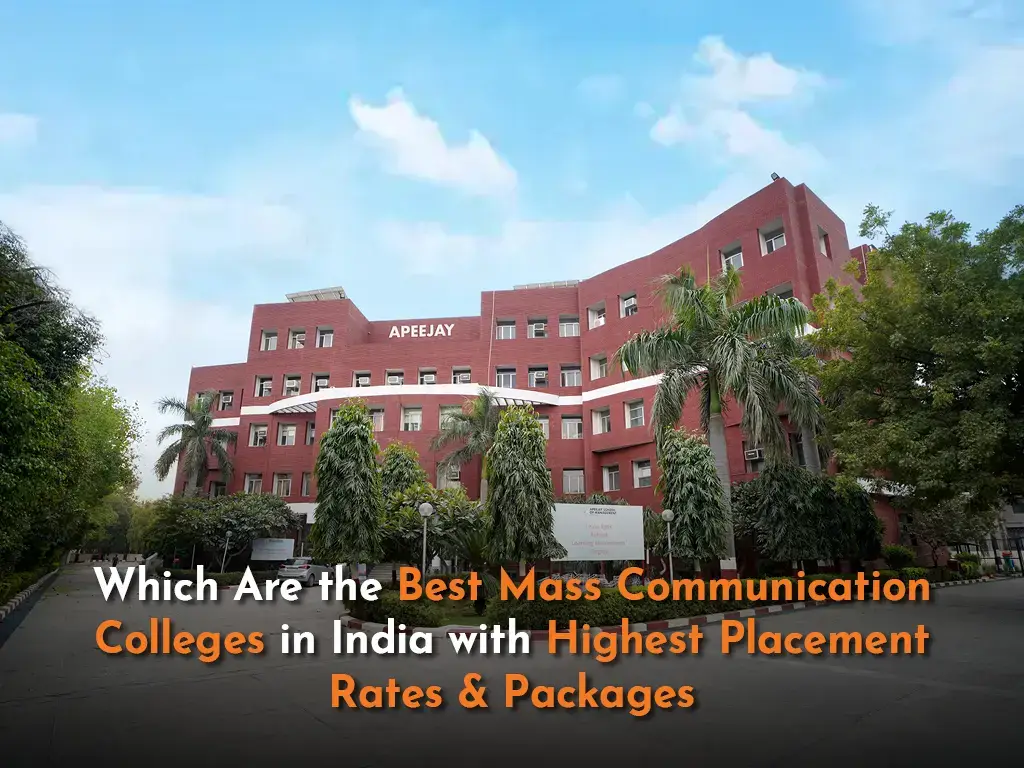
This is where the Apeejay Institute of Mass Communication (AIMC) in Delhi fits well, especially for students looking for AIMC Admissions 2026. Students gain a better sense of how media teams work, how fast the field moves, and the kind of discipline the profession requires.
Why placements need a closer look
Placement figures matter. They should. A family is investing time, money, and trust, so it is natural to ask what kind of career can follow. But in mass communication, one high package does not show the whole picture.
A student may get a strong start through a newsroom role, a PR agency, an advertising firm, a production house, a digital platform, or a corporate communication team. What matters is whether the role fits the student’s training and interests.
AIMC students have been recruited by more than 100 reputed media and entertainment organisations. Parents and students need to look at this aspect while comparing the best journalism college in Delhi. As for the salary, it is always better to confirm the latest package details directly with the institute before making a decision.
This is where practical work becomes important. Before interviews begin, students need real work to show. A report they wrote. A video they edited. A campaign idea they shaped. A social media page they handled. The best mass communication colleges in India usually build this steadily, not only during the final placement round.
What to Check before Choosing a Mass Communication College
A lot of colleges will start to feel the same after the first round of research. That’s when students and parents need to dig a little. You can’t do a media course through lectures and written exams alone. Students need to practise, get feedback, do internships, and have enough room to find out what kind of media work suits them.
| What to check | What it should tell you |
| Course structure | Is the course covering journalism, PR, advertising, digital media, and production usefully? |
| Practical training | Will students be writing, reporting, editing, presenting, shooting, and working on campaigns regularly? |
| Internships | Are students exposed to real media workplaces? |
| Portfolio work | Will the student have enough samples of work to show during interviews? |
| Placement support | Does the college prepare students for roles, interviews, and industry expectations? |
| Location | Is the college located near enough media companies, agencies and production spaces? |
For students comparing the best mass communication colleges in India, such a checklist is often more useful than a ranking. It reflects how well a college is preparing students for the media industry in a practical, consistent way.
Why Study at AIMC?
Apeejay Institute of Mass Communication, Dwarka, is worth looking at because its focus is on media and communication. For a student already interested in journalism, advertising, public relations, digital media, or content work, that focus matters. They are not entering a course where media is treated like an add-on.
A good PGDM programme should let students try different parts of the field. One student may enjoy reporting and writing. Another may feel more at home in PR, advertising, digital content, production, or corporate communication. The course should help students notice these strengths while they are still learning, not after they start applying for jobs.
For students comparing the best mass communication colleges in India, AIMC’s Delhi location and focused media training make it a relevant name to look at. It also fits the search for the best journalism college in Delhi, especially for those planning for AIMC Admissions 2026.
What students should expect from a media-focused PGDM?
A PGDM should give students regular chances to write, report, edit, present, plan campaigns, work on production, and understand digital media. These are not skills students pick up by only attending lectures. They need to try, make mistakes, receive feedback and improve their work over time.
If you’re a student looking at AIMC, this is worth checking out. A media course should allow them to produce work they can present at interviews. It also aims to help them express their ideas more clearly and to understand how the different parts of the media industry work.
That is usually the difference between a course that feels useful and one that only looks good in a brochure.
Highest Placement Rates and Packages: What Students Should Actually Check
When students look for the best mass communication colleges in India, placements naturally become part of the comparison. During research on the best journalism colleges in India, names such as IIMC, MCRC Jamia, Symbiosis Institute of Media and Communication, Xavier Institute of Communications, Bennett University, AAFT and AIMC often come up.
But the highest package should not be the only deciding point. A student may get a good start in a newsroom, PR agency, advertising firm, production house, digital platform or corporate communication team. What matters is whether the role fits the student’s training, strengths and long-term interests.
For AIMC, one useful point is that its students have been recruited by more than 100 reputed media and entertainment organisations. Students looking at AIMC Admissions 2026 should ask the institute directly for the latest placement rate, the highest package, the average package and recruiter details. These figures can change from one batch to another.
Career options after a PGDM in Mass Communication
It can take students in more than one direction, which is why the course appeals to different kinds of learners. Some students enter with a clear interest in journalism. Others discover, during the course, that they are better suited to PR, advertising, digital content, production, events, or corporate communication.
| Career area | Possible roles |
| Journalism and news | Reporter, anchor, editor, digital journalist, news producer |
| Public relations | PR executive, media relations associate, communication executive |
| Advertising | Copywriter, account executive, campaign planner, brand communication associate |
| Digital media | Social media executive, content strategist, digital content creator |
| Video and production | Video producer, assistant producer, scriptwriter, production coordinator |
| Corporate communication | Internal communication executive, corporate communication associate |
| Events and brand work | Event communication executive, brand activation associate |
This is also why placements in mass communication cannot be judged in one narrow way. A newsroom role, a PR agency role, and a digital content role may all be good outcomes, depending on the student. The best mass communication colleges in India help students notice these choices early, so they can build the right portfolio and choose internships with more purpose.
How to make the final choice
When students compare the best mass communication colleges for PGDM in Mass Communication, the final decision should not depend on one thing alone. A college may have a good name, but students and parents still need to see how the course works in everyday learning. Before applying, it helps to check whether the college offers:
- Regular practice in writing, reporting, editing, production and presentation
- Internships that introduce students to real media workplaces
- Portfolio work that students can show during interviews
- Guest sessions, workshops or live projects with industry exposure
- Placement preparation before the final interview stage
- A location that keeps students close to media companies, agencies and digital platforms
For parents, this shows whether the college is thinking beyond lectures. For students, it answers a more personal question: Will this place help me find the kind of media work I can actually see myself doing?